Evaluating Unicorn Magic for Creative Projects
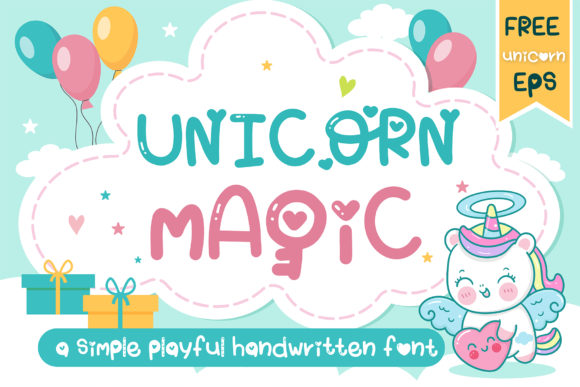
In the expansive landscape of digital typography, selecting the right typeface is often a matter of balancing aesthetic appeal with functional utility. For designers seeking to inject a sense of whimsy, joy, and playful energy into their work, Unicorn Magic presents a distinct option. This display font is characterized by its cute and jolly demeanor, offering a visual style that is both sweet and full of life. While it may not serve as a primary body text solution, its unique personality makes it a compelling tool for specific design contexts where attention-grabbing visuals are paramount.
Understanding the Aesthetic Profile
At its core, Unicorn Magic is designed to evoke feelings of lightheartedness and fantasy. The term "display font" indicates that this typeface is intended for use at larger sizes, such as in headlines, posters, logos, or decorative elements, rather than for long-form reading. Its letterforms are crafted to appear friendly and approachable, avoiding the stark severity of many geometric sans-serifs or the rigid formality of traditional serifs.
The "cute and jolly" description is not merely marketing language; it reflects the actual structural choices made in the font’s design. The curves are likely soft, the proportions may be slightly exaggerated for charm, and the overall rhythm of the text feels energetic. This makes it particularly effective for projects targeting audiences who appreciate playfulness, such as children’s media, party invitations, or lifestyle brands focused on happiness and creativity. However, this same characteristic limits its versatility. It is inherently informal and should be avoided in contexts requiring seriousness, authority, or minimalism.
Technical Accessibility and Glyph Management
One of the most significant practical advantages of Unicorn Magic lies in its technical encoding. The font utilizes PUA (Private Use Area) encoding. To understand why this matters, one must look at how fonts store characters. Standard Unicode assigns specific codes to common letters, numbers, and punctuation. However, special glyphs—such as decorative swashes, ornaments, and alternative character shapes—are often excluded from standard encodings to save space or because they do not fit existing categories.
PUA encoding places these additional glyphs in a reserved section of the font file that is not tied to specific keyboard inputs. While this requires users to access them through a font management application or a dedicated glyph panel rather than simply typing them, it ensures that all available assets are contained within a single file. For designers, this means:
- Complete Access: You can access every swash and alternate character without needing multiple font files.
- Visual Consistency: All decorative elements share the same weight, style, and design DNA as the base letters.
- Ease of Use: Once familiar with the glyph panel, integrating these extras into a layout is straightforward, allowing for rapid iteration on design concepts.
This feature is particularly beneficial for illustrative typography, where the integration of symbols and flourishes is essential to the final composition. It reduces the friction between finding the right element and placing it on the canvas.
Ideal Use Cases and Applications
Given its specific stylistic traits, Unicorn Magic shines in environments where mood-setting is more important than readability. Here are several scenarios where this font aligns well with project goals:
- Event Invitations and Stationery: For birthday parties, baby showers, or themed gatherings, the font’s joyful nature sets the tone immediately. It communicates celebration without needing additional imagery.
- Brand Identity for Niche Markets: Businesses in the craft, baking, or toy industries often benefit from a logo that feels handmade or whimsical. Unicorn Magic can provide a memorable mark that stands out against more corporate competitors.
- Social Media Graphics: In the fast-scrolling environment of social feeds, bold, decorative text captures attention. Using Unicorn Magic for quotes or announcements can increase engagement among audiences who respond to positive, uplifting aesthetics.
- Children’s Educational Materials: When designing worksheets, book covers, or classroom decorations, the font’s clarity combined with its fun appearance helps maintain student interest while remaining legible.
Potential Tradeoffs and Limitations
No typeface is universally applicable, and Unicorn Magic comes with inherent limitations that designers must consider before committing to it. The primary tradeoff is legibility at small scales. Display fonts often have intricate details or loose spacing that become indistinct when reduced to paragraph size. Attempting to use Unicorn Magic for body text will result in reader fatigue and potential misinterpretation of words.
Additionally, the subjective nature of "cute" and "jolly" means the font may clash with certain brand voices. If a company aims to project stability, luxury, or technological innovation, this font would create a dissonant message. It is also worth noting that PUA-encoded fonts require a bit more setup time compared to standard fonts. Designers accustomed to simple copy-paste workflows may find the need to open a glyph panel initially cumbersome, though this becomes second nature with practice.
Comparing Alternatives
When evaluating Unicorn Magic, it is helpful to compare it with similar display fonts. Competitors might include other whimsical scripts or rounded sans-serifs. Unlike script fonts, which rely on connected strokes that can be difficult to read, Unicorn Magic likely offers clearer individual letterforms, making it safer for short phrases. Compared to standard handwritten fonts, which can sometimes feel messy or inconsistent, Unicorn Magic provides a polished, uniform appearance due to its digital construction.
If a project requires a softer but less playful option, a rounded sans-serif might be a better choice. Conversely, if more elegance is needed, a flowing script might be preferred. Unicorn Magic occupies a middle ground: it is distinctly thematic but maintains enough structure to remain readable as a headline.
Decision-Making Insights
To determine if Unicorn Magic is the right fit, designers should ask themselves three key questions. First, does the project require a tone of joy, whimsy, or informality? Second, will the text be used at a large scale where decorative details are visible? Third, is the audience receptive to non-traditional typographic styles?
If the answer to all three is yes, Unicorn Magic is a strong candidate. Its PUA encoding adds value by providing a rich toolkit of swashes that can elevate simple text into a graphic element. However, if the project demands neutrality, high-density information delivery, or a professional corporate image, it is advisable to look elsewhere.
Ultimately, the decision rests on alignment with the project’s emotional goal. Typography is not just about conveying words; it is about conveying feeling. Unicorn Magic excels at communicating a specific kind of happiness and magic. By understanding its strengths in display applications and its limitations in body text, designers can leverage this font effectively to enhance their visual storytelling.